
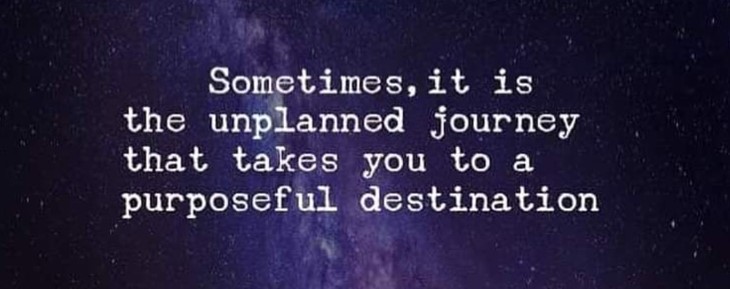
The Unplanned Journey
In reviewing the events and experiences of the past few months, struggling as I have to make sense of it all, it seems that my natural instincts have been a great deal more useful than any deliberate mental process I attempted to employ along the way. Hindsight typically provides us with a more informed viewpoint, and allows for an expansion of our general outlook, which is clearly only available to us after everything has already happened. When confronted with a dilemma of any sort, I am usually confident in whatever approaches my instincts provide and value their existence greatly, but historically, I also prefer to include a robust thought process in my analysis of the prevailing circumstances, when trying to decide how to proceed.
Emotions are strong in any highly sensitive person, not just on the receiving end of the emotion, but also when sharing strong emotions with others. There are many layers of emotional content that can be less prevalent in some of us, and more pronounced in others. Sometimes, it’s what we FEEL that matters most to us, and which we may want to consider when engaging in our day-to-day activities, but we still need our full range of brainpowers.

In order to benefit in the long run, it makes sense to give some attention to all aspects available, including what we feel about whatever it is that might be the subject of the day. Even so, there is a clear difference between relying on a thoughtful and passionate display of emotion, and simply resorting to some sort of knee-jerk reaction when responding to external events.
Combining our inherent cognitive capacities with our more intimate appreciation of our subjective experience of existing in the world, (where the cognition part takes place) is an essential function of sentient life, without which we might not long survive. We must not rule out any viable strategy or reasoned approach to studying and considering how consciousness functions at each level of awareness, from the tiniest microbe to the more robustly built physical human being. There are whole ranges of values and characteristics to consider among all species, each according to their capacities and limitations, including Homo sapiens.
Strong feelings can also be a valuable asset in the right circumstance, and if they can be mitigated by an intelligent analysis of the situation, or at least supported by thoughtful reflection and careful consideration, it may just result in being able to move those proverbial mountains. People who have genuine compassion for their fellow travelers in this life, often demonstrate that concern for others as a result of some healing that took place in their own story, which can also be a powerful influence for choosing a subsequent course of action.
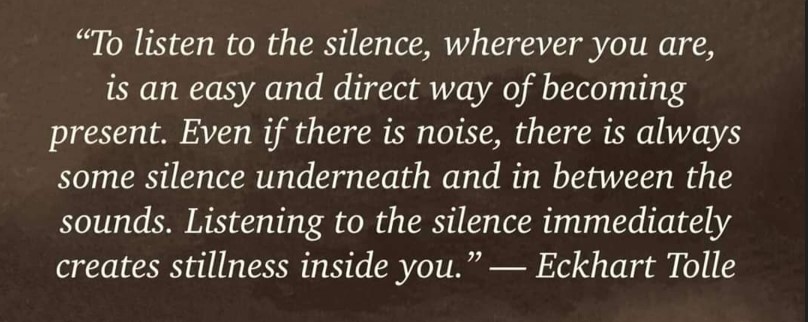
However, when seeking a method for attending to our INNER lives, we must begin by allowing ourselves to let go of all earthly concerns; to silence the mind; to abandon thought completely; and just be in the moment. Breathing is essential to life, so it makes sense to concentrate initially on the breath as a means of shifting our focus inward, and, with practice, doing so will hopefully become a self-executing process whenever we deliberately choose to go there.

Expanding our awareness by shifting it intentionally away from the relentless voice in our head can only assist us in opening ourselves to new possibilities of comprehending more completely, the fullness of our nature as complex organisms, while also raising our awareness of an intimate connection to all organic life in some fashion.
Our current understanding in quantum physics describes a universe in which every single physical structure—all matter in the universe—has the same subatomic nature, so ours is not exceptional in that regard. In order to become a recognizable organism, we must first rise up through the subatomic realm all the way through to the level where matter solidifies into distinguishable forms.
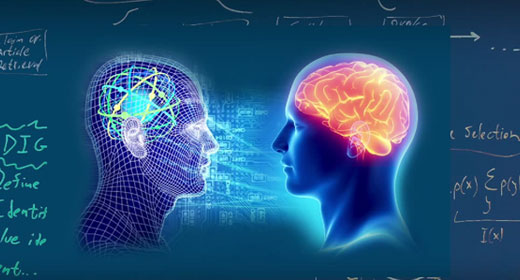
In organic life, each entity generally becomes recognizable as an organism, once it accumulates an aggregation of essential structures, achieved after developing in a process that forms their specific architecture. As humans, it is only after that development reaches a specific advanced level, achieved firstly through the expression of our genetic inheritance, but eventually culminating in the confluence of numerous complex processes, when we can finally experience our awareness as a living, breathing conscious being.
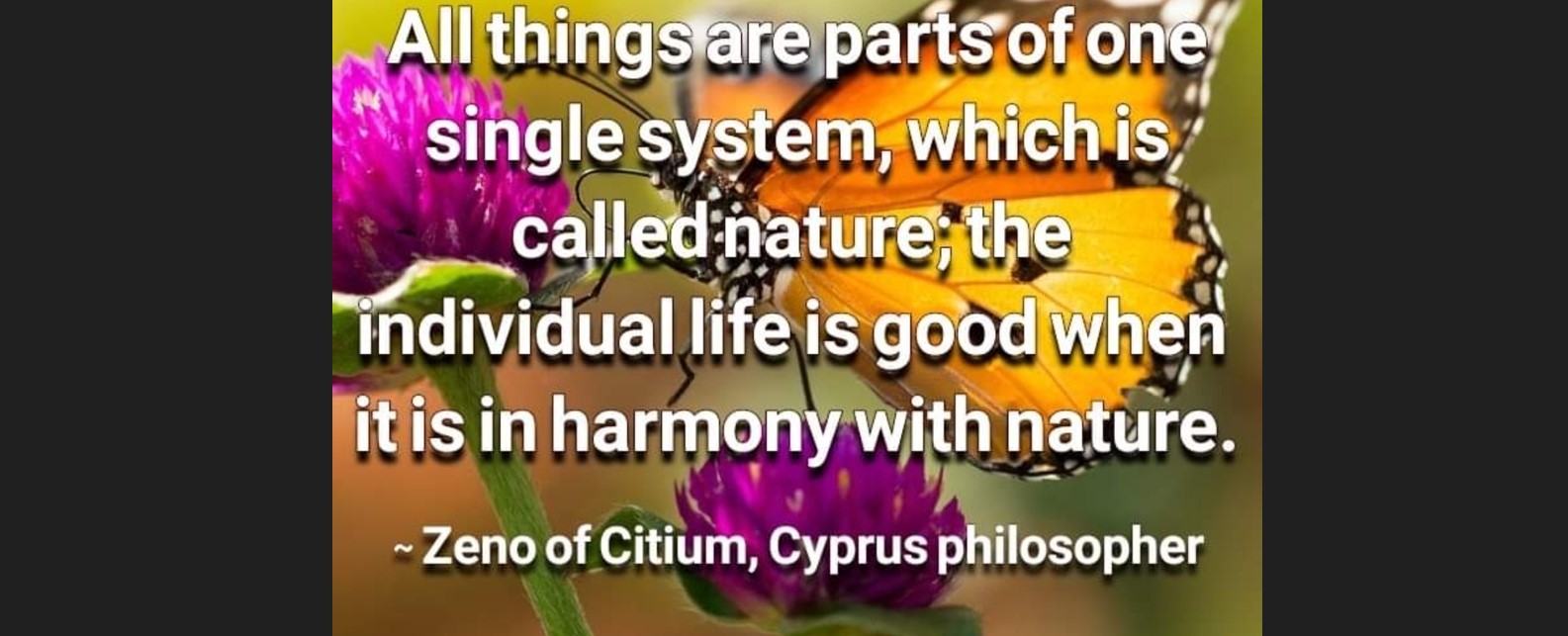
It is essential for the hardware of our cognitive apparatus to be nominally functional, and for the software contained in the cells to organize them into physical structures of organs and nervous systems. After a fairly long process of development, as we experience those nominal conditions, we will eventually reach a point where we can transcend them, long enough to more fully appreciate the scope of life, which includes the elusive, the mysterious, and the grandeur of all nature.
There is another existence—an existence beyond experience. Recognizing this was, for me, the true beginning of awareness.
The exploration continues…
 John's Consciousness