
Recent bouts of milder-than-usual morning and afternoon temperatures in this part of the country have provided several opportunities to sit out on the deck out back while enjoying my typical cup or two of coffee, stretching the experience out into the early afternoon. I am commensurately grateful for the chance to enjoy this ritual during this time, and I recognize that the encroaching seasonal changes will make such activities far less likely to occur in the days to come. When, at last, the arrival of the winter season eventually prohibits such opportunities, I sometimes return to my personal journal to re-read my accounts of these experiences to remind myself of the benefits gained during these moments, and to search for additional inspiration of the positive sort to see me through the challenges presented by the seasonal changes.
The other day, while paging through the handwritten notes of one such recording of my thoughts, I came upon a quote that accompanied the entry from “Liber Secundus,” in Jung’s “Red Book,” from chapter two, “The Castle in the Forest:”
“If you look outside yourselves, you see the far-off forest and mountains, and above them your vision climbs to the realms of the stars. And if you look into yourselves, you will see on the other hand the nearby as far-off and infinite, since the world of the inner is as infinite as the world of the outer. Just as you become part of the manifold essence of the world through your bodies, so you become a part of the manifold essence of the inner world through your soul. This inner world is truly infinite, in no way poorer than the outer one. Man lives in two worlds. A fool lives here or there, but never here and there.”
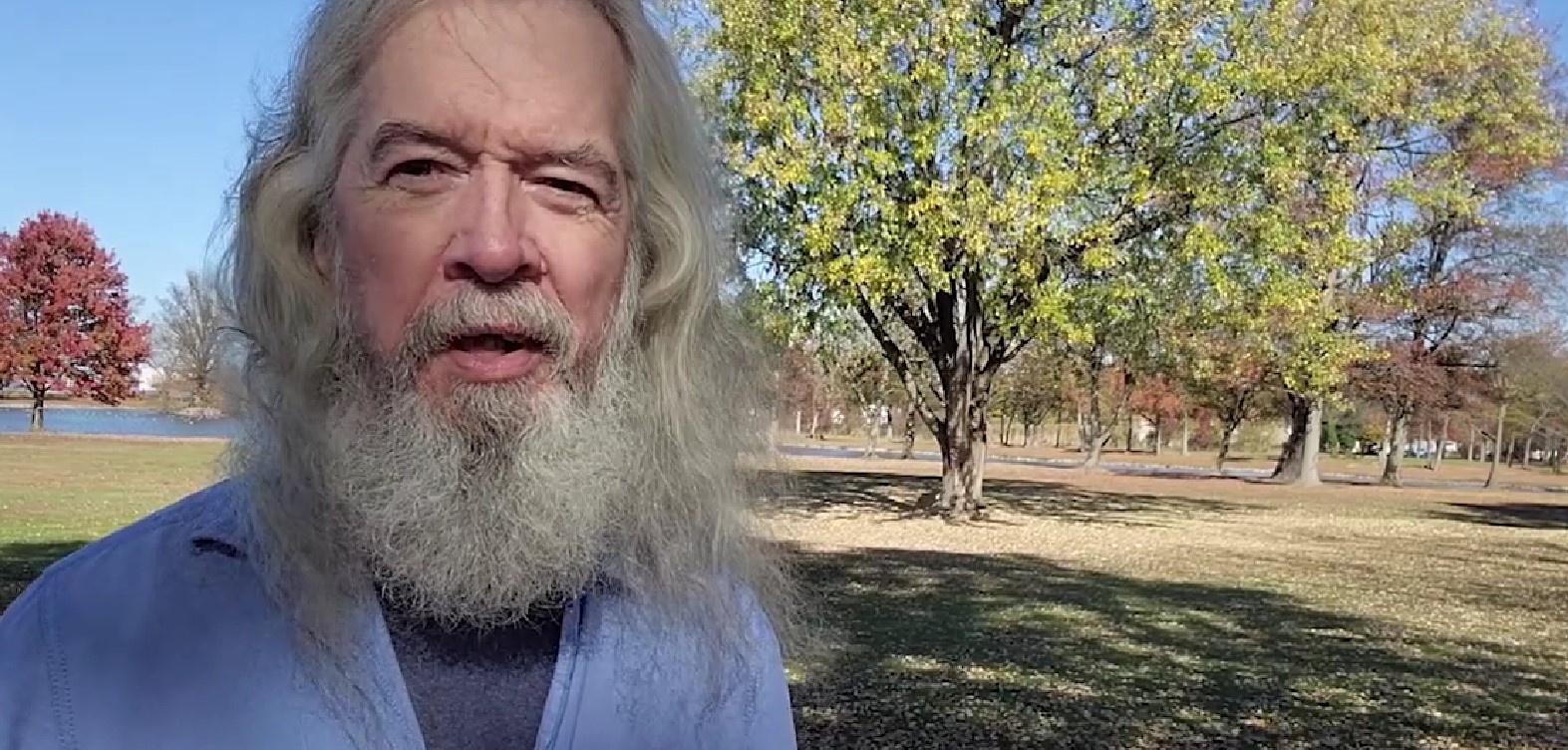
By coincidence, I had written the narration for Episode 7 of my video series, “A Theory of Everything,” in late October and early November of last year, with my own natural inclinations and conclusions from contemplation of the subject seeming to match those suggested by the quote from a much younger Jung, written during the period of his life between 1913 and 1930, which differ somewhat from those written in his maturity.
These ideas came to me much later in my personal life, whereas Jung composed his thoughts in his late thirties, forties, and early fifties. I have only now, in recent years, been able to write more coherently about the nature of my existence and find myself constantly refining and expanding on my earlier work, which often took place in brief episodes between a variety of obligations and responsibilities necessary to sustain my family.

In the most recent episode of my video series, “Writing about the World Within,” which presented reports of both temporal pursuits and contemplation of more esoteric subjects, I felt compelled to include both as a means to show their interrelatedness and mutually beneficial aspects, and as I reviewed a few subsequent entries in my journal, from the same time frame of late October and early November, I encountered an additional quote from Jung’s “Red Book,” from the same section, in Chapter 5, “Dies II:”

“Nothing happens in which you are not entangled in a secret manner; for everything has ordered itself around you and plays your innermost. Nothing in you is hidden to things, no matter how remote, how precious, how secret it is. It inheres in things…The stars whisper your deepest mysteries to you, and the soft valleys of the Earth rescue you in a motherly womb.”
This symbiotic relationship between everything which has “ordered itself around you,” and “the deepest mysteries,” all takes place in the “motherly womb” of the Earth; resonates within us through our subjective experience of consciousness and is revealed to us through the interactions in which we participate whenever we venture into the natural landscapes of “Mother Earth.” This combination of our awareness of our inner life and the temporal experience of our lives in the outer is an important component of our path toward understanding, and Jung expressed this in the concluding words of this chapter:
“…you find manifold meaning only in yourself, not in things, since the manifoldness of meaning is not something that is given at the same time, but is a succession of meanings. The meanings that follow one another do not lie in things, but lie in you, who are subject to many changes, insofar as you take part in life.”
My “Consciousness Video Series,” in large part, has been my attempt to show that the “two worlds” Jung spoke of are essential in coming to terms with our human nature, and point to the importance of the principle of how we must live “here and there.”
More to come…
 John's Consciousness
The Aled Jones digital art picture is fabulous. It does much for me and in particular appeals to that very large part of me which refuses to live in the mundane.
In essence I have lately come to realize with ever greater urgency that it is of great importance to live one’s own life in accordance with one’s own worldview. And to declare to oneself just what that view is.
If others share such a view, all well and good. If they do not that is equally acceptable to me.
Inner and outer. Yes. Monism perhaps. Part of a whole. In any event, there is much left to explore.
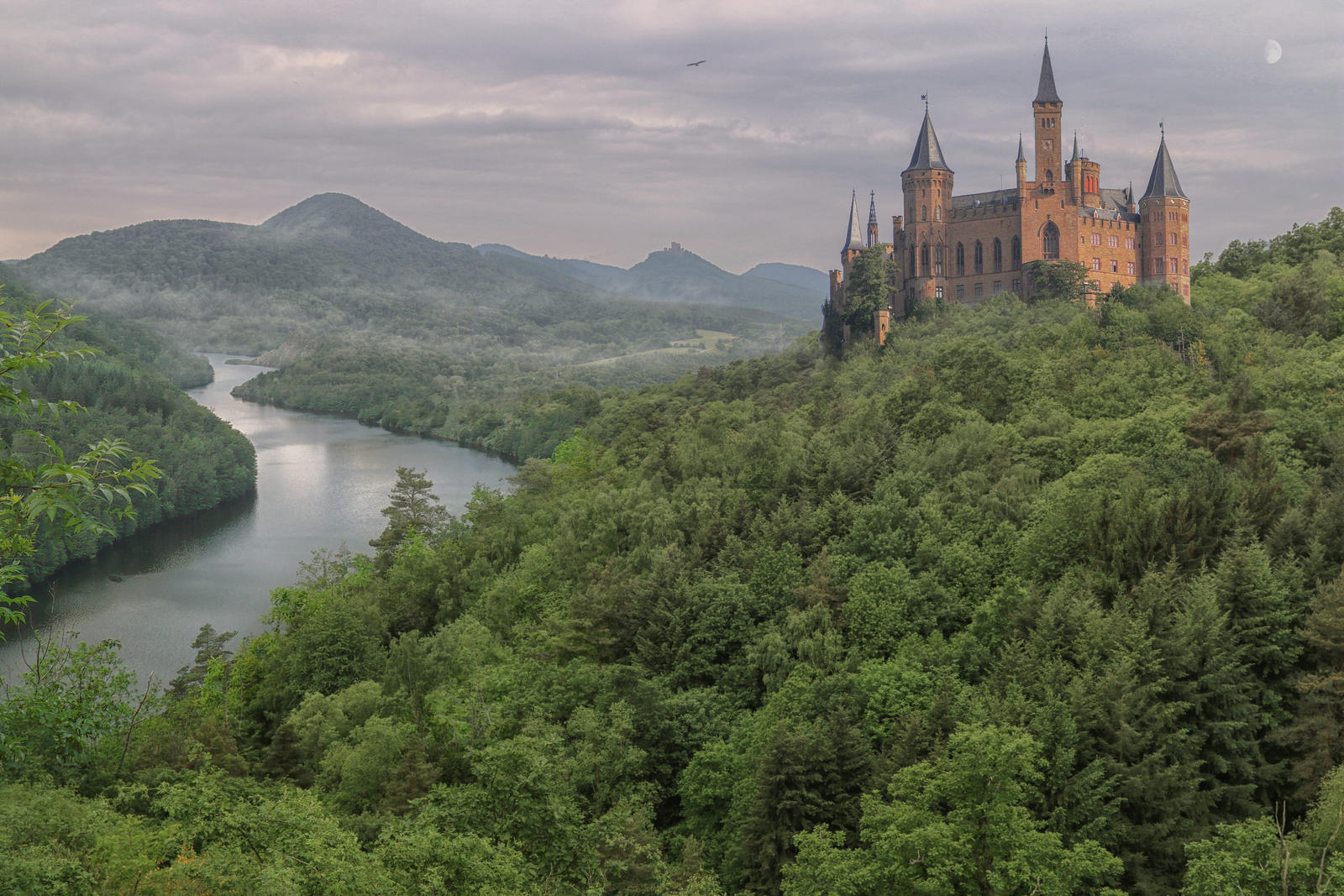
I also felt moved by the digital picture at the top of the post and I have a particular fondness for mountain landscapes to begin with as a result of visiting so many of them throughout my lifetime. In Jung’s chapter of the Red Book entitled, “The Castle in the Forest,” there is a fascinating conversation about the nature of existence and how we “belong not only to an ordered world,” but also to “the inner world of (the) soul.” The first quote I included in the posting suggests that these are two distinct worlds, and that life has a kind of dual nature to it, while still being in need of “balance,” and that we achieve balance “only if you nurture your opposite.” Whereas Monism advocates a reality which is “ultimately grounded in a singular substance or principle,” (oneness) I have recently begun to lean toward what is described as “nondualism, which is “inclined towards direct experience as a path to understanding,” and emphasizes the “transformative power of first-hand encounters with the underlying unity of existence.” It is a more “intuitive form of knowledge,” which emphasizes “unity amid diversity.”
There is, indeed, much left to explore, as you say, and I also find no concerns with accepting that others may not share such a view. By expressing our own worldview as we continue living in accordance with it, we may inspire a greater urgency for others to do the same. Balance is key.