

Digging through the information stored in my brain in memory is sometimes like conducting an archival search of historical records. Even though, according to modern neuroscience, reviewing our memories is not usually a precise recreation of those remembered moments, stored over the years in which they were relegated to long-term status, we actually reassemble the components of those events and experiences in a manner that may often alter the arrangement of the particulars, or, at the very least, interprets them through the lens of our current worldview, which has the advantage of hindsight, and the possible disadvantage of infrequent review. The neural pathways responsible for our ability to recall important memories, if they are not re-enforced through periodic review, may not be sustained after enough time has passed.
Remembering the events of the past few months or perhaps even including recent years, is much more likely to provide us with an accurate accounting of them, while events from twenty or thirty years ago, depending on how often we ponder them, can be less reliable, with the possible exception of certain traumatic events, which are notoriously stubborn with regard to recall.
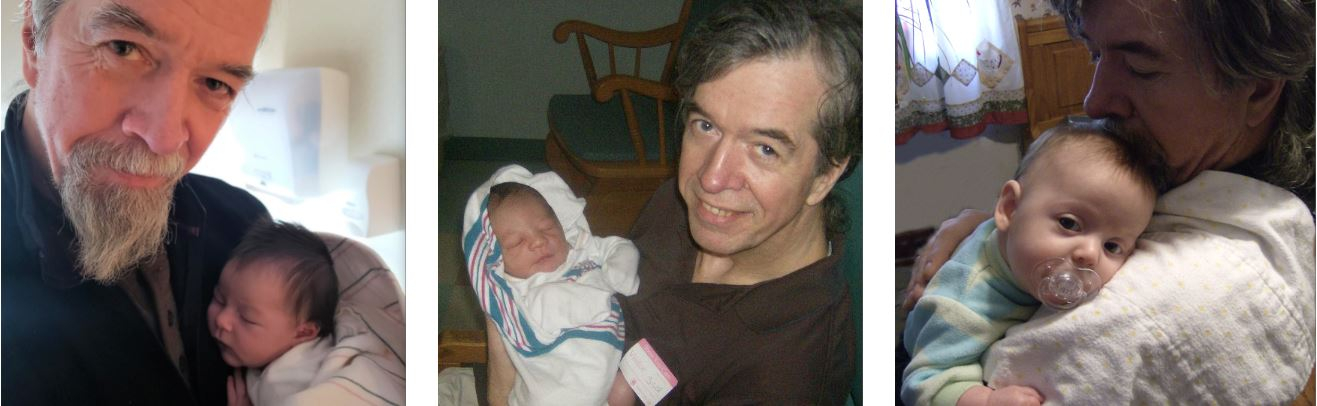
Within the framework of our modern understanding of the processes of memory, there is a vital role played by the subjective experience of those moments, and how urgent or emotionally charged those moments FELT to us. The feeling of delight as we embraced our newborn children, or the experience of agony when we fell and broke our leg, and perhaps even the feeling of relief to finally accomplish some long-term goal, all remarkably different in character and intensity, have the virtue of sharing the essential component of how those events made us FEEL. Emotional intensity, when combined with some extraordinary event, brings together the information of the historical record with the subjective feeling which resulted, in a way that solidifies the memory beyond those of lesser intensity, giving us a range of priorities which affect just how likely those memories might lend themselves to more accurate recall.

In the typical “rush and heave” of modern life, there can seem to be fewer moments available to disengage from the relentless onslaught of stimulation and abundant information processing that goes on all around us, but if we are persistent and deliberate in seeking out a means to do so, the rewards can be greatly increased, and one very reliable method of reaping the benefits of historical recall of events can be found by intentionally recording those experiences when they occur by making entries in a written journal or by utilizing other recording methods that can be referenced to enhance recall even many years later.

As an older person now, having spent many years collecting both memories and recorded accounts of those events, created to increase my ability to recollect important experiences, I can see the benefits of this important work, and establishing this blog, in many ways, has been possible, in large measure, by my persistent attention to the task of supporting my brain’s natural capacities for establishing the neural pathways necessary for memory.
To be of any use at all, reflection and contemplation of the “archives in my brain,” must be accompanied by the simultaneous inclusion of the portion of the archives which reflects the workings of my heart, which were recorded at the same moment. We cannot be satisfied to recall only the “historical record,” but must go deeper when we record the experiences and events in whatever way works best for each of us.
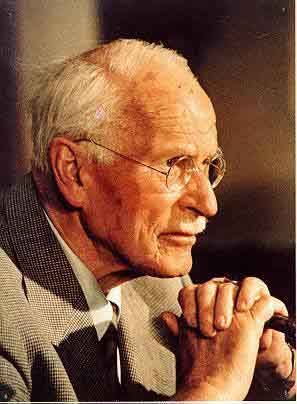
In his epic publication called, “The Red Book,” Carl Jung emphasized the importance of including both the “scholarship” and the “knowledge of the heart:”
“Scholarship alone is not enough; there is knowledge of the heart that gives deeper insight. The knowledge of the heart is in no book and it is not to be found in the mouth of any teacher, but grows out of you like the green seed from the dark earth…But how can I attain the knowledge of the heart? You can attain this knowledge only by living your life to the full.”
I have reached a point in my life now where almost every event can be viewed through the prism of long experience, providing an enhanced perspective commensurate with long memory. Many of my mental energies are engaged in processing ideas that have been formulated over the past several years, and my sense of urgency has been pressing against this developing view.

Reviewing the many recordings made over the years, and considering their content in the context within which they took place, has been illuminating in a way that only such lengthy reflection can provide. Some of the content is specific to the time of the recording and can remind me of those events in a purely practical sense, and yet other aspects of the records can surprise and delight me in the degree of insightful reflection they contain. Certain passages sometimes delve deeply into my thought process, and others describe in greater detail the contributions provided by the knowledge of the heart, reflecting the complete and utter boundlessness that the realm of possibility presents to us, and which can inform us, if we are mindful of the importance of both sources contained in memory.
 John's Consciousness
Loved this. I don’t think there’s too much of an appreciation by some on the importance of keeping a journal. It’s true that memory has the potential to distort what we believe was true, especially if it was from years ago, but it’s also viewed by perspective, emotion and what we thought at the time. One cannot deny the writing. 😘
It seems right to say that if we faithfully record not just the particulars and details of the experiences we have, but also our feelings and analysis provided by our perspective at that time, we can often appreciate how we have grown and how our perspective has changed, given the events which took place in the interim.
If we wrote that, upon reflection, we may have made an error in judgement, it’s even possible, in retrospect of course, to see that it may not have been a mistake, and vice versa!
Young people are not encouraged these days to write in a journal, nor are they learning cursive writing. This deficit is glaringly obvious these days, as nearly everything is the quick fix, the popular trend, and a variety of distractions that make critical thinking, contemplation, and well-thought-out writings nearly obsolete.
You are exactly right! You cannot deny what you write with your own hand!
Thanks for your thoughtful comment!