

It is becoming more evident these days that it is very likely, given our advanced knowledge of quantum theory, that everything is connected, and what we perceive as separate objective reality is, in fact, a manifestation of a universal oneness to everything that exists, constructed in its various different forms, as the physical universe of objects and others. Our perceptions of the physical world in which we live give us this sense of separateness as a means of navigating through the physical world, and acts as a kind of reference point for that purpose. How else could we exist physically without such reference points?

It seems perfectly reasonable to me that our perceptions of the physical world are designed to function in the way that they do, in order for us to make sense of the world in which we exist physically, and that a larger and more expansive existence functions as the foundation for all things, requiring physical laws to regulate the objective world, while still leaving open our ability to discern what lies at the heart of the totality of the universe.

There are those who would wish to confine our understanding to those physical laws and principles as a means of making sense of the existence of temporal beings in what appears to be an infinite realm outside of our reach in the distant galaxies and in the vastness of space, but it is becoming increasingly clear, even to the materialists and scientists, that there are layers of existence—strata to the content of reality—which are not directly subject to the physical laws which govern the physical universe itself.
Is this an example of cognitive speculation?
…of course…
The beginnings of every innovation and every new practical idea are contained in the exploration of ideas generally. Speculation leads to examination, and examination leads to exploration of what might support that speculation. We must begin somewhere!
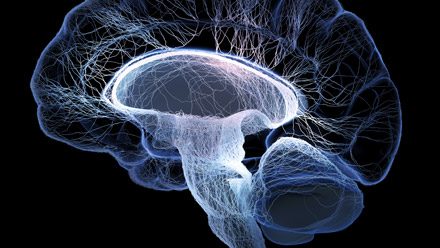
The difficultly usually comes when we consider that we are attempting to reach an empirical understanding of a highly subjective experiential awareness. We know all about the way the brain supports our awareness, and how it can enrich the outcome of our computations and our speculations. The support mechanisms of our cognitive processing in our brains have practical applications in assisting us while navigating within the objective temporal world, and informing our awareness through critical thinking and cognitive processing.
This is a fairly straightforward proposition, even though we are still not completely sure how everything works in our brains. We know a lot more now than ever before, but we still have gaps in our knowledge, and must continue to explore.
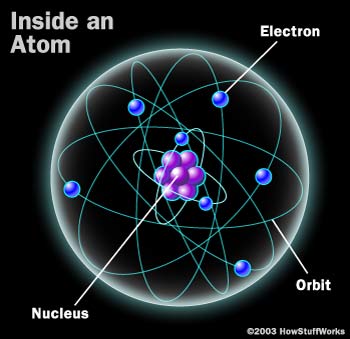
The full and true nature of reality itself is a wide-open question for most serious thinkers, but we have a fairly solid grasp of the general run of things in broad terms when it comes to the cosmos—the world of the expanding universe—and to the quantum world—that which governs the world of the very small. In broad terms, we have a kind of “gist of what’s happening,” in reality, and we continue to search for explanations and evidence of what constitutes the true nature of both objective and subjective reality.
Even Einstein thought that “imagination is more important than knowledge. Knowledge is limited. Imagination encircles the world.”
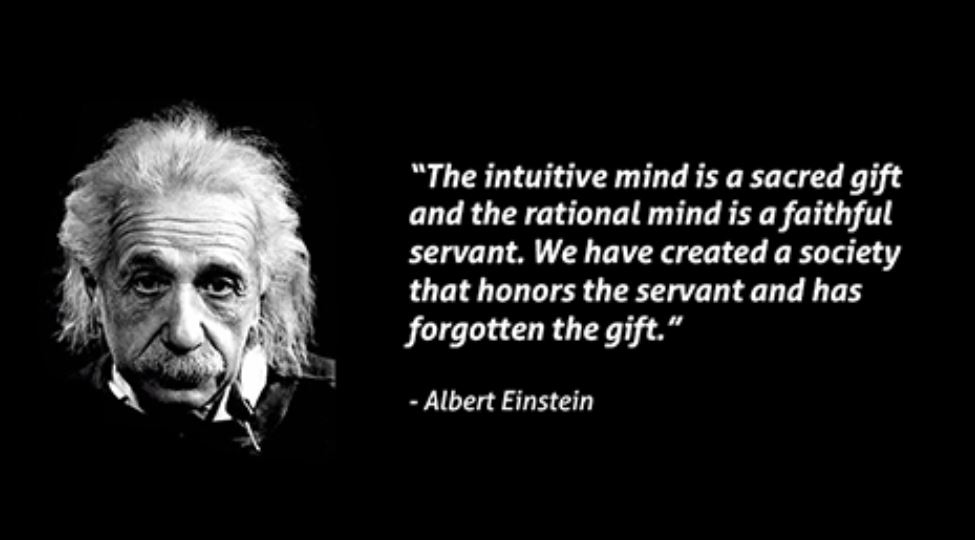
It doesn’t just encircle it. It sits at the very heart of all understanding. We must first imagine that something IS possible, before it can be shown to BE possible. It doesn’t take that much effort to appreciate the fact that if one only sets their sights on ways to eliminate what they consider to be impossible, then no matter what they imagine in THAT case, it will focus only on what is NOT possible. When we question whether or not something MIGHT BE possible, that’s when we seek most earnestly. If something actually IS possible, the only way to find out is to explore. Exploration requires speculation at a certain point. It should be a staple of investigations of every kind.
When we develop theories, we are especially compelled to speculate about the subject of the theory, and then to suggest possible resolutions to explain the idea. Whether or not there may ever be an empirical explanation, we can still examine the subject and see how a particular theory might explain what we witness and experience as subjective beings.

The idea of a “non-local” character to consciousness is something that I suggested quite a long time ago, and while it is clearly a challenge to establish anything for certain, reviewing our own experiences with a critical eye could present us with some indication of a non-local nature to our experience of consciousness.
I began this entry with the suggestion that “Everything is connected,” and the evidence is beginning to mount in support of that idea. Reality is not simply and only a physical phenomenon. In order to explain our subjective experience of the world, it seems like we will have to speculate a bit more and investigate and extrapolate. Just because we are exploring doesn’t imply that we will discover anything new necessarily, but we may be able to piece together a picture of reality that leaves an opening for aspects which we are unable to explain empirically.
 John's Consciousness
Your proposal of universal oneness and a non-local character for consciousness offers one way to explain what a purely material account may leave out. A related test is whether naturalism can explain our knowledge of subjectivity in the first place.
David Chalmers argues that naturalistic processes couldn’t have given us knowledge of consciousness. Can naturalistic processes explain how humans came to know that subjective experience exists?
Thanks so much for your thoughtful comment, and I apologize for taking so long to respond. I wanted to give your ideas a thorough examination, and it took me a little longer than I expected to arrive at a response. I applaud your efforts to think your way through the topic of the video that you referred to in your message, but I felt as though I did not want to include the link to it for several reasons.
Primarily, I think the explanations are not well formed in the video, in spite of an earnest attempt to report the view that naturalism is insufficient to explain consciousness or the subjective experience of consciousness. It’s not that it is inaccurate or faulty in the conclusions, but rather that it is insufficiently fulsome to justify the conclusions that it reports, in my view. “The Human Subjective Experience of Consciousness,” is not a simple thing to explain. It is a very complex subject which cannot be distilled down into a single brief video presentation. It’s an ambitious goal to be sure, but I didn’t feel as though I wanted to promote it here on my blog that I’ve been writing for more than 15 years.
Subjective experience–the awareness of being aware–is clearly quite complex and mysterious in some ways, but to be fair, the SCIENCE of human subjective experience is equally fascinating, and has resulted in great progress in understanding and explaining brain physiology, and the processes which support the complex machinations of our sensory systems. The potential involvement of quantum effects and the nature of the subatomic world, of which everything is made, rather than de-mystifying consciousness, seems to me to fit right in with the inexplicable nature of the subject.
I also have posted an eleven-part video series on the subject here, and while I produced them earnestly and with a commensurate degree of humility in acknowledging what we DON’T know, I tried hard not to offer conclusions, so much as to inspire others to ponder the subject. Trying to encapsulate more than 30 years of my research and writing over that time has resulted in almost 450 blog postings over the years I have posted them here. I think maybe even THAT much work is not truly sufficient either, so I’m not pretending to know more than anyone else.
I think it’s important not to advise other people how THEY should think or present our ideas as though they represent what everyone should conclude. There are several appropriate disclaimers in the video and that’s okay too, but the tone and the underlying premise of atheism verses faith is not something I personally wish to promote here.
I appreciate your interest and thank you for taking the time to share your thoughts with me….John H.