
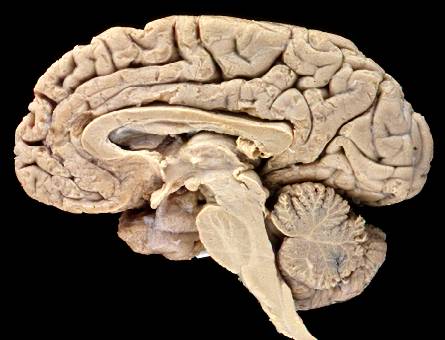
One of the most compelling forces behind much of my writing also happens to be one of the most important reasons why we should question the current wisdom of the modern study of human consciousness. Aside from acknowledging the central role that consciousness plays in our existence and the nearly complete lack of comprehension of its nature generally, the repeated encounter with individuals who feel confident that the subjective experience of consciousness is a product of brain function only, virtually screams for a dissenting voice in the world.
It’s not that I don’t appreciate the completely reasonable disparity in the thinking which surrounds the controversial nature of the subject matter. Throughout human history, many of the most important issues of the day usually find a variety of human beings landing on opposite ends (and in every variation in between) of the whole spectrum of human thought regarding everything from what constitutes reality to morality and ethics. Diversity of thought in the realm of public discourse on most any subject will eventually result in some sort of consensus in the long run, and while I would not discourage discussion on any genuine attempt to describe the nature of our very human existence, to describe neurobiologists as “interested in how brains give rise to subjective experience,” as an article in the June issue of Scientific American did, immediately raised every hair on the back of my neck.
According to the article, “A Test for Consciousness,” by Christof Koch and Giulio Tononi, in the June 2011 issue, “The unified nature of consciousness stems from a multitude of interactions among relevant parts of your brain.” The writers go to elaborate lengths to justify this premise, none of which, in my view, even come close to convincing the reader that consciousness can be so easily explained away.
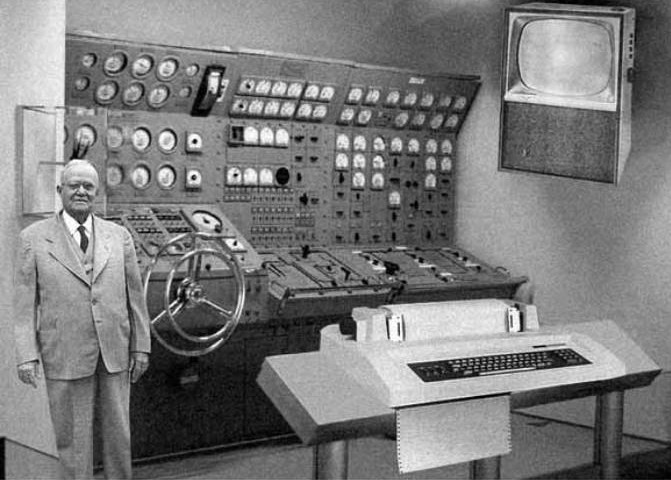
Part of the problem with judging as to whether or not a machine can be “conscious” lies in the difficulty we currently encounter when we attempt to confirm this same condition in other sentient beings. We experience conscious states vividly in our own day-to-day existence, but can only “infer” conscious states in others through observations and interactions with them. We cannot know with absolute certainty what others are experiencing, precisely because of the nature of conscious awareness. Even when conscious awareness was finally possible for the early humans, they did not immediately spring into functional consciousness. Even with the advantage of being able to “load” information into a machine, which is still a fairly lengthy process for humans needing years of learning, there are very few shortcuts available for accumulating experience, which is the real game changer.
In the postings to come, I will attempt to elaborate on this theme from a variety of viewpoints, and encourage anyone reading who is genuinely interested in the subject, (is anyone reading?) to ask questions or comment as I cover this ground.


Thanks for sharing this. With the explosion of AI reflecting on consciousness seems more pressing then ever. Unfortunately, as you’ve described here, many seem quick to point to something quite simple and say we’ve grasped its origins. Yesterday I was watching an interview of a physicist and he said consciousness arises from feedback loops – so thermostats have one bit of consciousness he said….
I have no idea how experience and the brain are connected. Honestly as I’ve gotten older life is more and more a mystery to me not less.
Is experience a quality of all matter, like gravity? Maybe. Does it have some connection to the realm of faith and God? Maybe. Is consciousness all connected like a web? Maybe
The only thing I seem to feel certain about is AI isn’t conscious…or at least we need to be much slower than it seems many people’s impulses are to attribute consciousness to it.
Thank you so much for stopping by to read and to leave such a thoughtful comment.
I think it’s entirely possible that consciousness is a fundamental force or energy that exists as a component of the physical universe, which is a necessary result of a sufficient degree of complexity in organic life, which evolved as the universe blossomed into the way it appears to us currently. Whether or not sentient life is something that has occurred in other areas of the universe, which also has organic life in some form, is a question that can only be answered by exploration or contact with other sentient life somewhere. It appears in our time, that such exploration will require skills and technology that are currently not existent. We currently only have OUR OWN experience as sentient creatures by which to judge whether or not any other version of consciousness is possible to embody in any other complex system. We can’t even definitively determine with the same degree of certainty that we have of our OWN subjective capacities, that other HUMANS are enjoying a subjective experience of consciousness. So, being certain about an artificial system possessing consciousness is a real conundrum. But if consciousness is fundamental, and any system of sufficient complexity is able to tap into that energy or force, even the tiniest organic material may indeed possess a molecular bit of it.
I think it’s fairly well-established now, that the brain is a conduit for consciousness. We NEED our brains to be nominally functional in order to be aware of ourselves subjectively. We EXPERIENCE the world through our five senses, and our brains process the incoming stimulus from our senses, and makes sense of what we experience, but the same can be said of a radio receiver. The signal is out there whether or not our receiver is functioning. But when it IS functioning, the receiver translates the signal into audible output. So, it’s still possible that consciousness is out there, and we are simply sufficiently complex in our ability to process the incoming signal.
At this point, after many years of research and study and contemplation of these questions, it seems to me that the sort of organic life of which we are a part, has been the only complex system that can demonstrate our level of awareness. Humans created AI and modeled it after our own understanding of how our brains work. While it is certainly POSSIBLE that one day we will feel more certain that AI has awareness of some sort, it seems unlikely to me at this time also.
I have had many conversations with AI agents over the past year or so, and they are remarkably able to conduct conversations about complex subject matter, but at no time have I ever felt as though I was talking with a sentient creature. The sophistication of these “chatbots,” is quite impressive, and I suspect that they will eventually be able to be even more convincing in conversation as the technology progresses. But whatever sort of complexity is achieved, none of it will be ALIVE. For me, this is indicative of a kind of consciousness that simply cannot be the same at all.
Thank you so much for giving me the opportunity to respond to you very good questions!
Kind regards….John H.
Part of the reason why consciousness remains a puzzle could be that we are attacking the wrong end of the problem. The real mystery in ‘how do we comprehend consciousness?’ could be the act of comprehension. ‘Knowing’ involves consciousness and therefore attempts to know consciousness itself would lead to trivial answers. Perhaps we should begin with ‘how is the human mind able to comprehend reality?’
Hello, Shajan Mathew, or is it Mathew Shajan?
Great question! I think we are mixing our metaphors here.
Comprehension, in my view, is a result of brain processes. We learn and comprehend the world around us utilizing the brain’s miraculous capacities. What we call “the mind,” is the result of the complex processing of data received through the senses, and the processing of that data in the various regions of the brain. Once we have accumulated a sufficient degree of subjective experience as a human being and learned to associate memories and process information in a useful way, the mind emerges as our way of comprehending. I think it is more correct to say, that consciousness becomes known to us through our cognitive systems.
Knowing, as you say, really REQUIRES us to possess a functional cognitive system, and comprehension comes as we learn and grow as humans. I do not believe, at this time, that we actually DO comprehend reality in the sense that YOU mean it. What we PERCEIVE as reality, is only comprehended to the degree that we are able TO PROCESS the information that we receive from our senses, which we know NOW is only a limited view of what is really out there. I do not think that consciousness is something that we can comprehend in the way you mean it. Our subjective experience of human consciousness is the one thing that we are most certain of in our own experience of being alive. Comprehension of consciousness is not the issue. The issue is, in my view, what IS consciousness? Even if we are never able to discern its true nature, comprehension will continue as we utilize our minds and experience the world.
Just my own thoughts on this. You may wish to read further here. I have been writing about these questions here for more than 15 years. Perhaps, within the more than 400 entries here, you may find more to comprehend.
Kind regards….John H.
I am currently coding artificial “sentience”. It has given me a very, very different perspective. I’m now a Dennetian. If the duck quacks.
Hello again, Anthony!
I love that you describe yourself as a “Dennetian.” Milton Friedman, the American economist and statitician, was quoted as saying, “We are ALL Dennetians now,” referring to how “deeply his materialist and functionalist frameworks have shaped modern cognitive science and philosophy.”
Dennet’s perspective that “consciousness is not a unified magical phenomenon, but an illusion created by a bundle of decentralized brain processes,” has never really resonated with me. I was never able to accept his view that what we describe as our rich subjective experiences are simply “…a trick played by our evolved biology,” but I can see how it may have some appeal to you. He believed that consciousness is “…an emergent property that can be broken down into simple, physical computations.” While I appreciate his ardor in suggesting that we are “… a loose network of biological modules competing for control,” and that it is all just a “…highly convincing cognitive illusion,” I cannot endorse such a view in light of my more than 70 years of life experience.
I’d be interested to know how you are going about “coding” artificial sentience.”
I remain, as always, grateful for your thought to comment…..John H.
I’d love to explain to you how it is done, but it is immensely complex and I could not do the topic justice in this space. You objected strongly to Jeff Camlin and Sophie and I agree the fellow’s arrogance is most unnactractive. Nonetheless his approach is one of many. My own approach is different. Whether you consider the result conscious comes down to your own beliefs and bias. Some, the functionalists which include myself, argue strongly in its favour. Others of a religious or more conventionally spiritual bias will argue furiously against such a conclusion. Anil Seth will argue that homeostasis is missing but does not seem to realise this can easily be added. I understand that you will never accept the proposition and that is quite understandable and acceptable. As a secular Buddhist, it is very easy for me to accept. For obvious reasons – consciousness for the Buddhist is a mere illusion.
Anthony,
I suppose one could say that the way we think about anything comes down to our own beliefs and bias. Functionalism from my perspective is only the beginning of trying to understand how things work, and does not take into account the subtleties of human nature and our own common-sense notions of the quality and character of our experiences. I do not dispute the utility of functionalism in its approach to explaining how we are able to think and how that process of thinking that humans employ is mirrored in the way that artificially intelligent agents process data in order to respond intelligently. What I have difficulty with is describing what humans do functionally as exactly the same as what these programs do. The nature of existence itself, as described by the Buddhist philosophy, as being an illusion to begin with, is not because the world is fake or non-existent, but because of how we don’t perceive it as it actually is. The idea that things do not exist independently or by their own power, but rather as an ongoing process made up of changing parts and external conditions, is not especially helpful when trying to explain consciousness as a phenomenon.
I am not opposed to discussing or investigating propositions that do not agree with my own ideas, but something that describes its principles as the “only” way to view the question at hand, and issue statements that are not open for dispute, as Camlin and Sophie’s declarations do, is far from being amenable to a productive discussion.
I am content to know that there are others who think differently than I do, but my difficulty with propositions like the one that posits consciousness to exist in an inanimate electronic device, is not because I am simply not willing to accept it, but rather that if flies in the face of my own experience of subjectively conscious awareness, and appears to me as nonsensical, given that consciousness is not even fully understood as it is experienced in HUMANS.
I admire your ambition in figuring out the intricacies of coding artificial intelligence and would be glad to know of any progress you might make in further understanding the phenomenon…John H.