

It occurred to me this evening to write about the nature of reality in the sense of how we view it, not so much in the way it actually exists or persists. I’ve been reading about a particular approach to a theory of consciousness and while I was absorbing the flow of the ideas and the explanations for the ideas, I had to stop for several minutes to gather my wits and ruminate on what I had read, and picked up a second book I have been intending to read for some time, and simply began reading it. Once I got through the first two pages, I had to stop again.
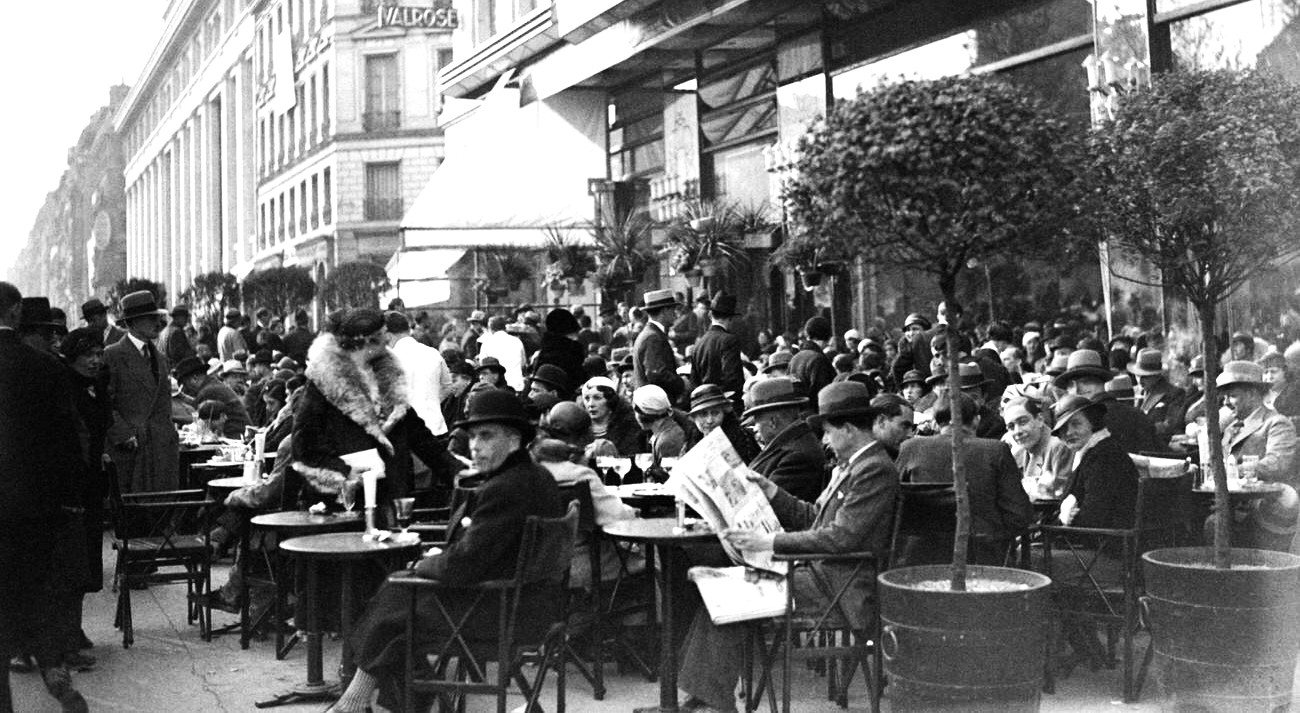
The story began with people in a café in Vienna in 1930, who were scientists and mathematicians in a smoke –filled room all sitting around a circular marble table top, with the stakes being reported as “Everything, Reality, Meaning, Their lives.” They were writing equations on the marble table top and sharing ideas about what was being written, and I was struck by their reported insistence on rejecting anything that suggested mysticism or metaphysics—not just a rejection—but a loathing of any such aspect which did not fit neatly into their scientific approach to separating out “truth.”
While I can easily imagine and empathize with a purely scientific approach to any phenomenon or principle, I wondered momentarily why there would be such an immediate and vigorous rejection of such things by intelligent humans, without any consideration whatsoever of the possibility that such aspects might exist in a way that made such a virulent rejection seem untenable. I imagined a photographic image from that timeframe of these thinkers in the café in some sort of history book, since one of the participants in the circle was the logician and mathematician, Kurt Gödel.

It occurred to me that the black and white images we associate with such events from so long ago, were also part of the very beginning of my own appearance as a human person on this planet, albeit not so long ago as that. It wasn’t the time frame that provoked the rumination, though, but rather that the beginning of my own life was only recorded in black and white photographic images as were the many images from history of famous people, who were not particularly famous when the images were created, but which were captured in the same way as the ones with me in them all these years later. And it stopped me in my tracks.
We suppose, as we live our lives these days, that the images from history where famous people are depicted, captured simply the historical event within which those individuals appeared, and that the reason they are notable still today, is because we are fully aware of, for example, that the early black and white images of Albert Einstein, before he was famous, depict someone who BECAME famous. Whether or not those images would be any different from the ones of this seasoned writer is a matter of conjecture, to be sure, but had Einstein simply resolved to live out his life as a patent clerk, those images might never have come to light at all.

And further along the path of rumination this day, I began to feel a kind of uneasiness about those historical images. Those individuals in those images from history are no longer walking among us, and yet they once were alive and well and living in the world, experiencing life in their own times, and ruminating about the things that were important to them in those days, just as I am now doing here at this very moment.
I have been preoccupied with the study of the subjective experience of human consciousness for decades now, and my research and investigations have led me through a host of related fields of study, all of which seemed to me to contain some vital aspect that could help explain my own very personal subjective experience of my life. It seemed to me for a very long time that the best way for me to get a grasp of the subject was to investigate the scholarship and writings of experts in the related fields, but then to make it as self-referential as possible, in order to speak of the subject from a first-hand perspective in the main. My own recollections, my own perceptions, my own view of the nature of my own experience seemed to me to be the most direct path to comprehending the subjective nature of consciousness, since it is exclusively subjective in nature as we experience it.

The nature of subjectivity is already a tough nut to crack as someone locked inside my own body, and only truly able to confirm with certainty my own experience of existing as an individual. But when trying to dig into the nature of it as a phenomenon in general terms, which explain why it is that it exists in the first place, it becomes a daunting assignment with innumerable flow patterns and eddies of meaning and complexity. My recent investigations have begun to fill in some of the gaps in the puzzle of consciousness, and it seems as though the components which coalesce into consciousness are many, and that no singular idea or scientific explanation can suffice to truly explain its nature.
With the arrival of artificial intelligence into the mix, it has begun to unravel at least some of what we have been able to hobble together so far scientifically. Since we are unable to establish with certainty, the presence of conscious experience in other humans even, other than as listeners of human speech, and as observers of human behavior, and then comparing the speech we hear and the behavior we observe to what we suppose demonstrates self-awareness, attempting to determine if it exists in artificial systems is starting to look like we don’t really have a handle even on our own nature.

It can’t simply be that we judge an artificially produced entity to be conscious if we are able to engage that artificial system in a conversation that seems like the kind of conversation we might expect to have with a conscious entity. Just the APPEARANCE of having an exchange with a conscious entity cannot be the sole basis for that determination. Even if they are somehow able to produce a system sophisticated enough to engage us as an individual might, and have it embodied in some sort of realistic looking robot body, un-tethered to a wall socket, as in the film, “Ex Machina,” it still would require us to view it as a machine that is able to interact with us, and be programmed and enabled through a vastly complex database. Of all the things that make us human, those criteria are only sufficient to provide us with a beginning step toward a determination of sentience.
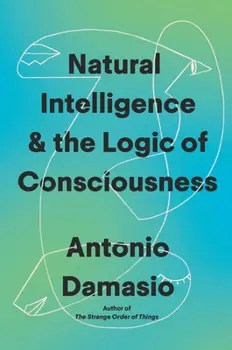
In his recent publication, “Natural Intelligence and the Logic of Consciousness,” Antonio Damasio suggests that our “interoceptive feelings,” those which originate within us, combined with our “exteroceptive perceptions,” which are “images of the world surrounding the body,” as well as images from “aspects of the thought process…recalled from memory,” and brought together by our process of reflection,” based on both of those components, generates our “ongoing subjective experiences,” describing them as “the fundamental ingredients of consciousness.”
This emphasis on processes within the physical body, and those which are exterior to us as we move through the world, combining with our mental reflections of both, seems to me to describe only the means by which consciousness becomes manifest through us, but does not answer the question as to why those processes are accompanied by our richly-textured subjective experience of existing.
He goes on to suggest that once these ingredients combine—that is when a conscious mind “emerges.” And once the combination of the “Perceptual, Reflective, and Linguistic processes are “properly identified as belonging to that same organism,” that is when the “inauguration of consciousness is accomplished.” He goes on to posit that the two-way communication between our perception of pain from a wound, for example, and our “interoceptive representation” of the wound, creates “an adjustable cross-messaging” that “generates what we call experience.” The emergence of these “homeostatic feelings,” he believes, “…constitutes a critical step responsible for the realization of consciousness.”
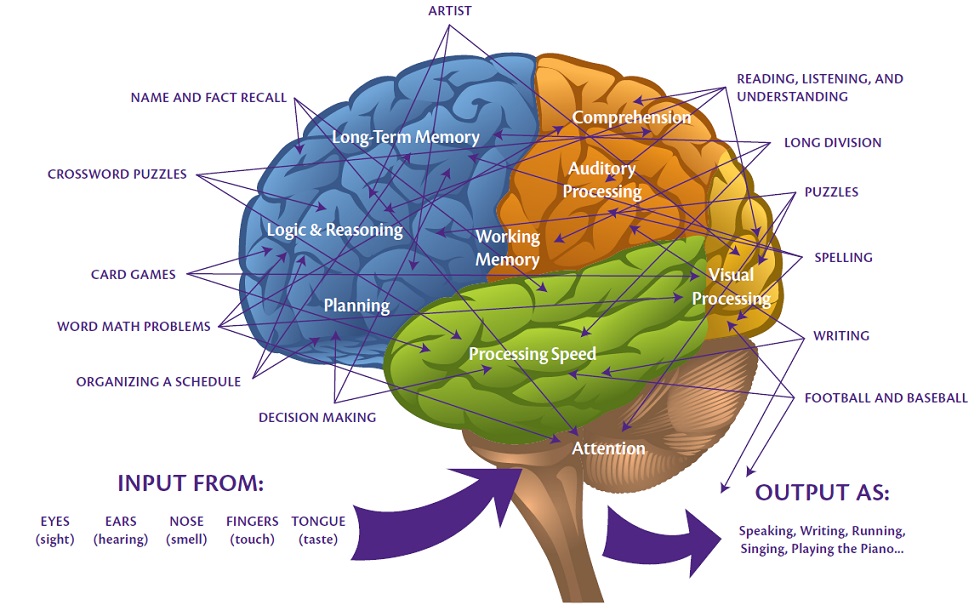
So, again, it seems to me, that this is only explaining the process within the physical structures of the body and brain that guide our behavior and facilitate the expression of our awareness of them, but does not address directly why all of these processes are accompanied by the subjective experience of existing. To say that all we need to do is to describe how these processes take place, and then to show how the processes produce sensations and trigger behavioral responses is all we need to do to understand subjectivity, feels like a kind of “sleight-of-hand,” that avoids the core issue of what might be the source of our human version of awareness, and answer the many questions about the true nature of our sense of the existence of the transcendent, and which forces or energies might contribute to it when we experience our lives subjectively.
***more to come***

